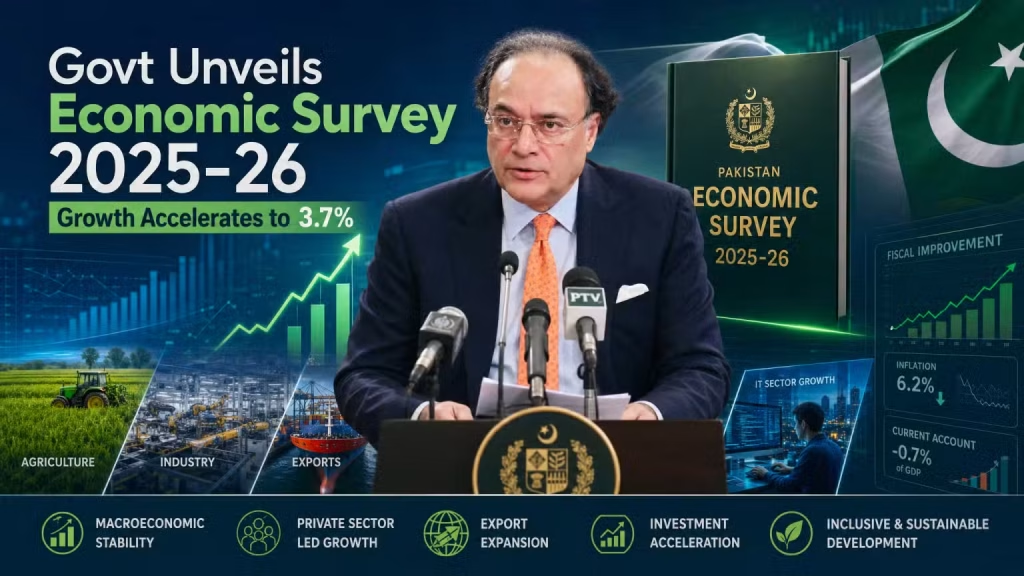
ISLAMABAD: Pakistan’s economy demonstrated resilience during the 2025-26 fiscal year, recording a GDP growth rate of 3.7 percent despite facing internal and external challenges, Finance Minister Muhammad Aurangzeb said on Thursday while presenting the Economic Survey 2025-26.
Accompanied by Minister for Planning and Development Ahsan Iqbal, Minister for Information and Broadcasting Attaullah Tarar, and Minister of State for Finance Bilal Azhar Kayani, the Finance Minister said the growth rate is the highest in the last four years and reflects the country’s progress from stabilization toward growth.
He said the size of the economy reached a record Rs 126.9 trillion, equivalent to USD 452.1 billion, while per capita income rose to USD 1,901 from USD 1,751 last year. Agriculture grew by 2.89 percent despite recent floods, while the industry expanded by 3.51 percent. Large-scale manufacturing posted a 6.1 percent increase, the highest in four years, with sixteen out of twenty-two manufacturing sectors reporting positive growth.
The services sector, traditionally a strong contributor to the economy, grew by 4.9 percent, with information and communication services expanding by 7.52 percent.
On the fiscal front, the Finance Minister said the fiscal deficit remained at 0.7 percent during the first nine months of the fiscal year, with revenue collection by the Federal Board of Revenue rising by 10.1 percent. A 23 percent reduction in markup payments provided additional fiscal space.
In the external sector, Pakistan recorded a current account surplus of USD 72 million during the first nine months. Remittances and investments in the Roshan Digital Account also increased. IT exports reached USD 3.8 billion and are expected to rise to USD 4.5 billion by year-end. The country’s foreign exchange reserves currently stand at USD 17.1 billion, projected to reach USD 18 billion by the end of June.
Domestic demand grew across several sectors, with cement consumption up 10 percent, fertilizers 17 percent, petroleum products 5 percent, and mobile phones 9 percent. Private sector credit increased by 22 percent to Rs 934 billion, while agricultural lending rose by 15 percent. The government’s Zarkhez-e scheme aims to support small farmers. Under the affordable housing program, Rs 11 billion has been disbursed, with Rs 90 billion approved.
On social indicators, the literacy rate increased to 63 percent, while the proportion of out-of-school children declined to 28 percent. The infant mortality rate dropped from 60 to 47 per 1,000 births, and immunization coverage reached 73 percent.