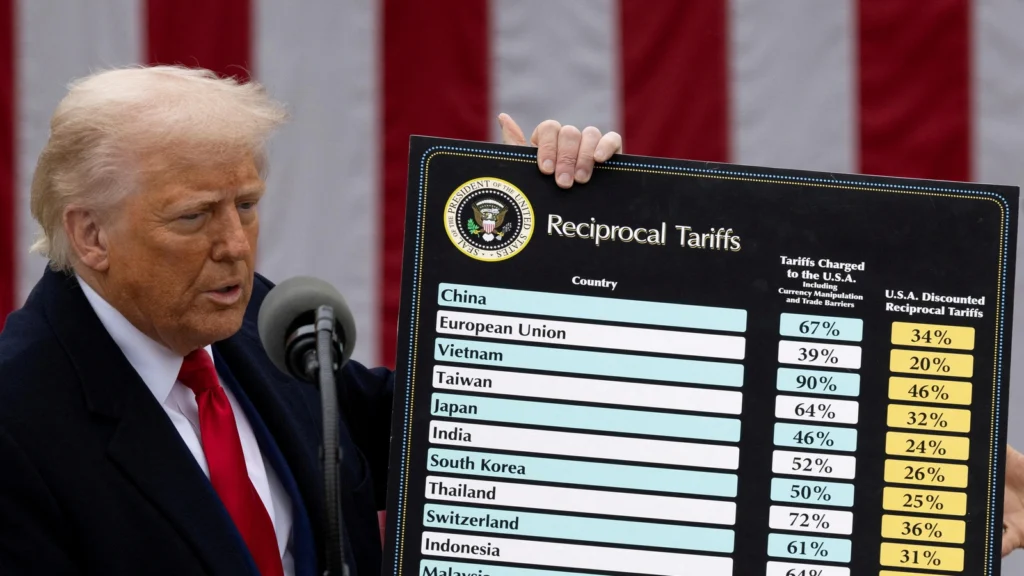
WASHINGTON: The United States has imposed new tariffs ranging from 10 to 12.5 percent on imports from more than 60 trading partners, including Pakistan, citing their failure to effectively prevent the import of goods produced through forced labor.
The new tariffs came into effect on July 24, with Pakistan among the countries facing a 10 percent tariff. The move marks the Trump administration’s latest effort to revive President Donald Trump’s global tariff policy.
Earlier, in February 2026, the U.S. Supreme Court struck down additional tariffs of 10 to 50 percent that had been imposed by President Trump on goods from various countries. This time, the administration has invoked Section 301 of the U.S. Trade Act to impose the new duties.
According to U.S. officials, the affected countries have failed to adequately enforce laws banning the import of goods produced through forced labor.
Countries subject to the 10 percent tariff include Argentina, Bangladesh, Britain, Cambodia, Canada, Ecuador, El Salvador, Guatemala, Honduras, India, Indonesia, Jordan, Malaysia, Mexico, Pakistan, Sri Lanka, and Trinidad and Tobago. Imports from another 38 countries will be subject to a 12.5 percent tariff.
Several U.S. trading partners, including Australia and Brazil, criticized the decision as unfair and said they would seek its reversal, while Norway argued that the tariffs were based on unfounded allegations.
The new measures exclude a number of imported products, including crude oil, natural gas, selected food commodities, and fertilizers. Products already covered under Section 232 national security tariffs, such as steel, automobiles, aluminum, and copper, are also exempt from the latest duties.