
Mumtaz Hussain
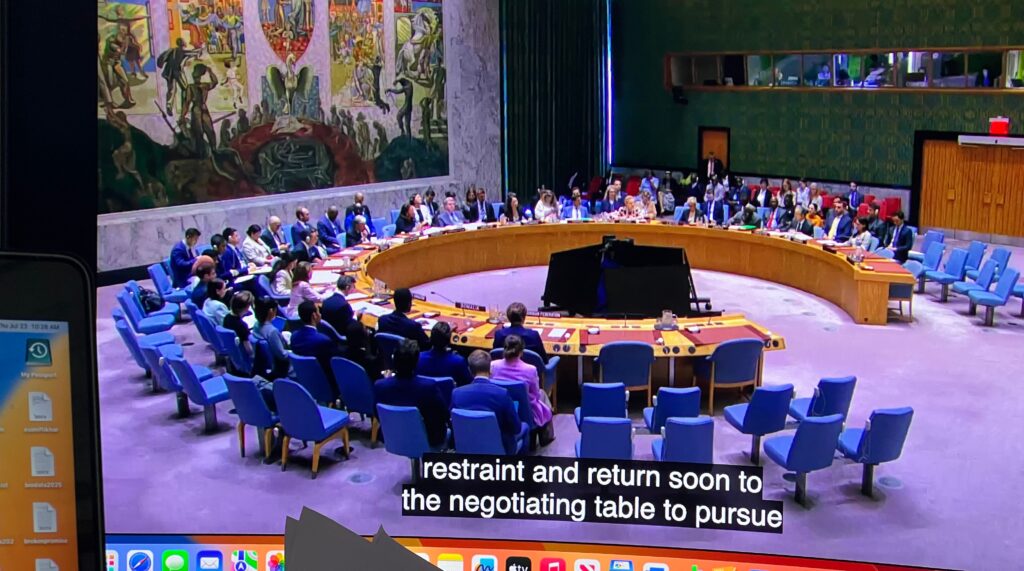
UNITED NATIONS: Pakistan has urged the United Nations Security Council (UNSC) to strengthen mechanisms for the peaceful settlement of disputes, calling for early diplomatic engagement, stronger support for mediation efforts and greater implementation of Security Council resolutions to prevent conflicts from escalating.
Speaking during the UNSC open debate on “Strengthening the Mechanisms for the Peaceful Settlement of Disputes in Follow-up to Resolution 2788”, Pakistan’s Permanent Representative to the UN, Ambassador Asim Iftikhar Ahmad, said diplomacy should be used to prevent conflicts rather than after peace had already failed.
He welcomed Secretary-General António Guterres’ recommendations, saying their sustained implementation would strengthen not only mechanisms for the peaceful settlement of disputes but also the implementation of the UN Charter itself.
The ambassador said Resolution 2788, unanimously adopted during Pakistan’s presidency of the Security Council last year, reaffirmed that diplomacy should remain the primary means of preventing conflicts.
While noting that the UN Charter already provides adequate mechanisms for the peaceful settlement of disputes under Chapter VI, he said the real challenge lay in their delayed, selective and inconsistent use.
“We have witnessed that all too often, the Council engages only after positions have hardened, trust has collapsed and the space for compromise has narrowed,” he said, adding that delays had resulted in protracted conflicts, unresolved disputes and acute human suffering.
Referring to the Jammu and Kashmir dispute, Ambassador Ahmad said Pakistan remained committed to its peaceful settlement in accordance with the relevant Security Council resolutions, which affirm the Kashmiri people’s right to self-determination through a free and impartial UN-supervised plebiscite.
He also highlighted Pakistan’s role in facilitating dialogue between Iran and the United States, saying diplomatic engagement had culminated in the Islamabad Memorandum of Understanding and the initiation of subsequent negotiations.
Expressing regret over the renewed outbreak of hostilities in West Asia, he said Pakistan hoped all parties would exercise restraint and return to negotiations, stressing that “whenever negotiations falter, the answer is not in less but more determined diplomacy.”
The ambassador proposed several measures to strengthen implementation of Resolution 2788, including earlier Security Council engagement at the first signs of tensions, structured follow-up on implementation of Council resolutions, greater use of fact-finding under Article 34 of the UN Charter, and stronger political and financial support for the Secretary-General’s good offices and mediation efforts.
He also called for wider use of legal and judicial mechanisms, including the International Court of Justice, enhanced cooperation between the United Nations and regional organisations, and periodic reviews of the Security Council’s implementation of Chapter VI of the Charter.
Concluding his remarks, Ambassador Ahmad said the imperative of peaceful settlement of disputes had become “more urgent than ever” at a time when armed conflicts were increasing across regions.
“There is no military substitute for a just and lasting peace,” he said, urging renewed emphasis on prevention, dialogue, mediation and peaceful settlement of disputes in accordance with the UN Charter.