
By Junaid Ashfaq
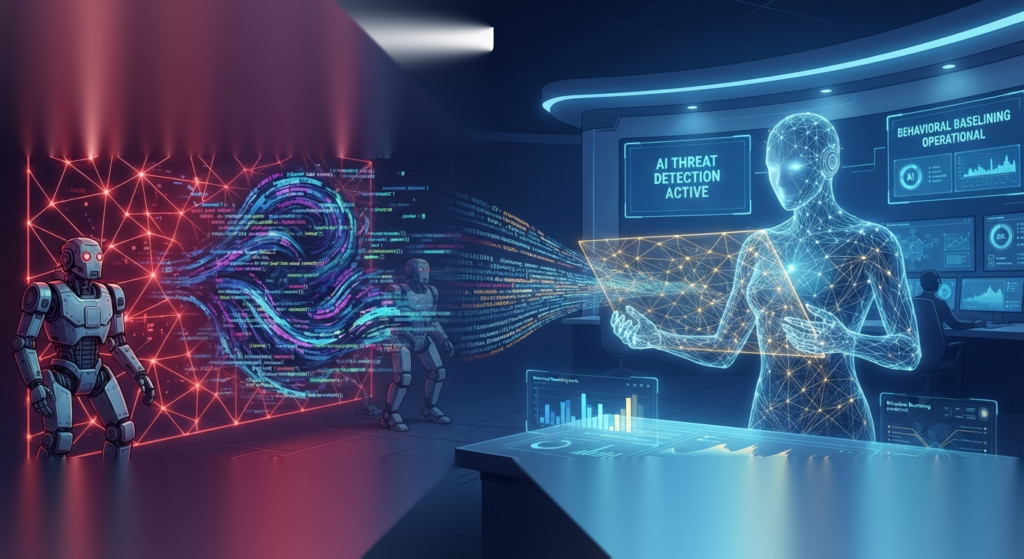
Cyberattacks now evolve faster than traditional security tools can respond. Generative AI in cybersecurity helps organizations detect, analyze, and contain threats before they cause widespread damage.
Legacy security systems relied on known attack signatures and manual investigations. Modern attacks constantly change their code and behavior, making those methods increasingly ineffective.
Organizations now use generative AI and large language models (LLMs) to improve threat detection, accelerate investigations, and strengthen security operations.
Why Traditional Cybersecurity Tools Fall Short
Most Security Information and Event Management (SIEM) and Endpoint Detection and Response (EDR) platforms depend on signature-based detection. They identify known malware through file hashes, IP addresses, or predefined patterns.
This approach struggles against zero-day attacks and newly developed malware. Unknown threats often bypass traditional defenses without triggering alerts.
Security teams also face alert fatigue. Thousands of low-value notifications consume valuable time and increase the risk of missing genuine attacks.
Maintaining detection rules adds another challenge. Expanding cloud environments require constant updates that many teams cannot sustain.
How Generative AI Improves Threat Detection
Generative AI shifts cybersecurity from reactive defense to behavioral analysis. Instead of searching only for known threats, it identifies suspicious activity by learning normal system behavior.
The technology analyzes telemetry from endpoints, networks, cloud services, and user accounts. It detects unusual actions that may signal an ongoing attack.
For example, AI can connect multiple suspicious events into one investigation. A late-night login, unusual file downloads, and unexpected permission changes may indicate a compromised account.
Unlike traditional tools, AI evaluates the full context instead of isolated events.
Faster Investigations With Natural Language
Generative AI also simplifies security investigations. Analysts can search complex security logs using everyday language.
A request such as, “Show lateral movement attempts from the marketing network during the last 48 hours,” produces relevant results without writing complex queries.
This capability reduces investigation time and allows junior analysts to work more efficiently.
RELATED: https://newsdiplomacy.com/pm-cdf-inaugurate-pakistans-largest-ai-ready-data-centre/
Real-World Applications of Generative AI
Organizations increasingly automate routine security tasks with generative AI.
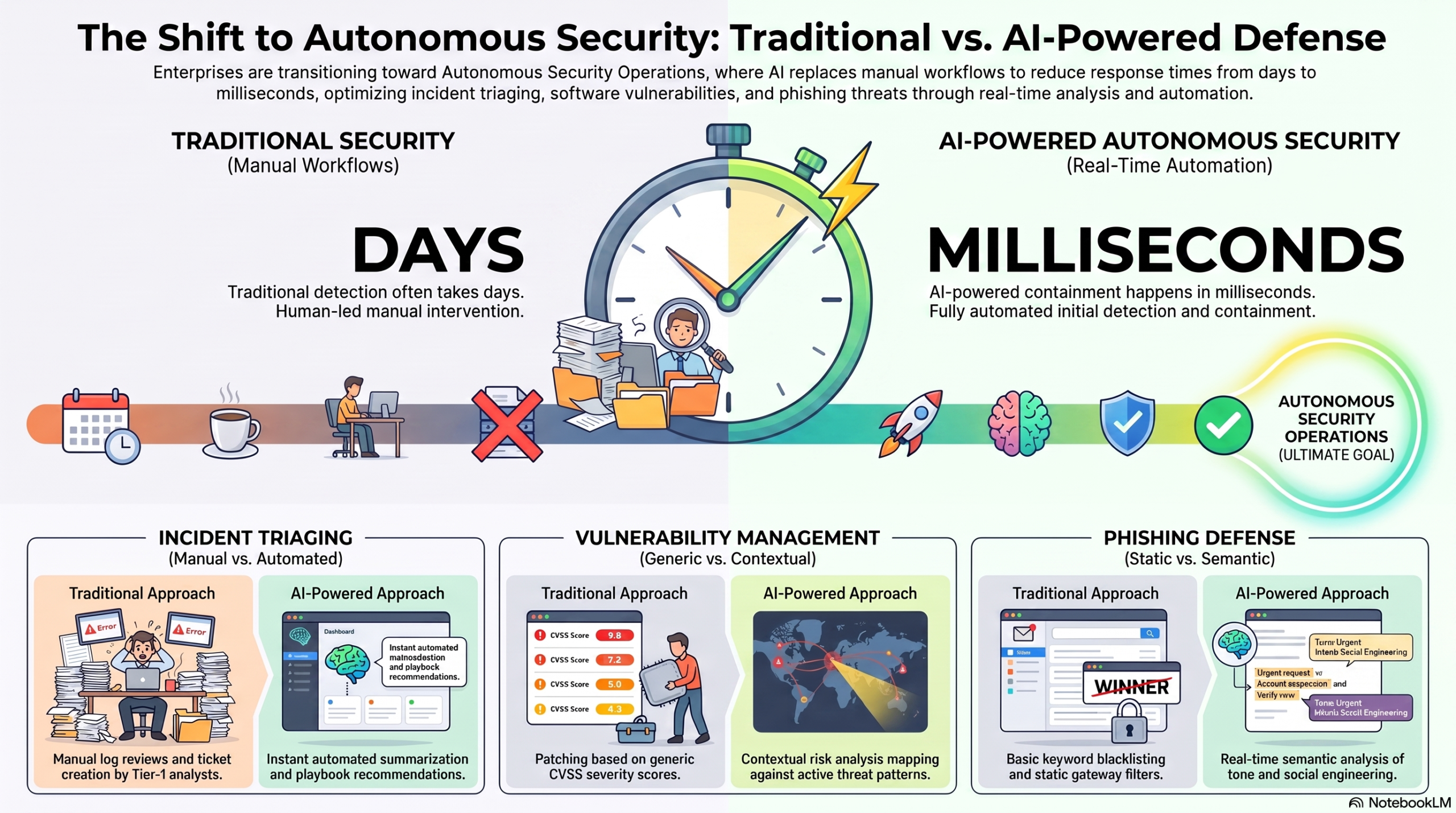
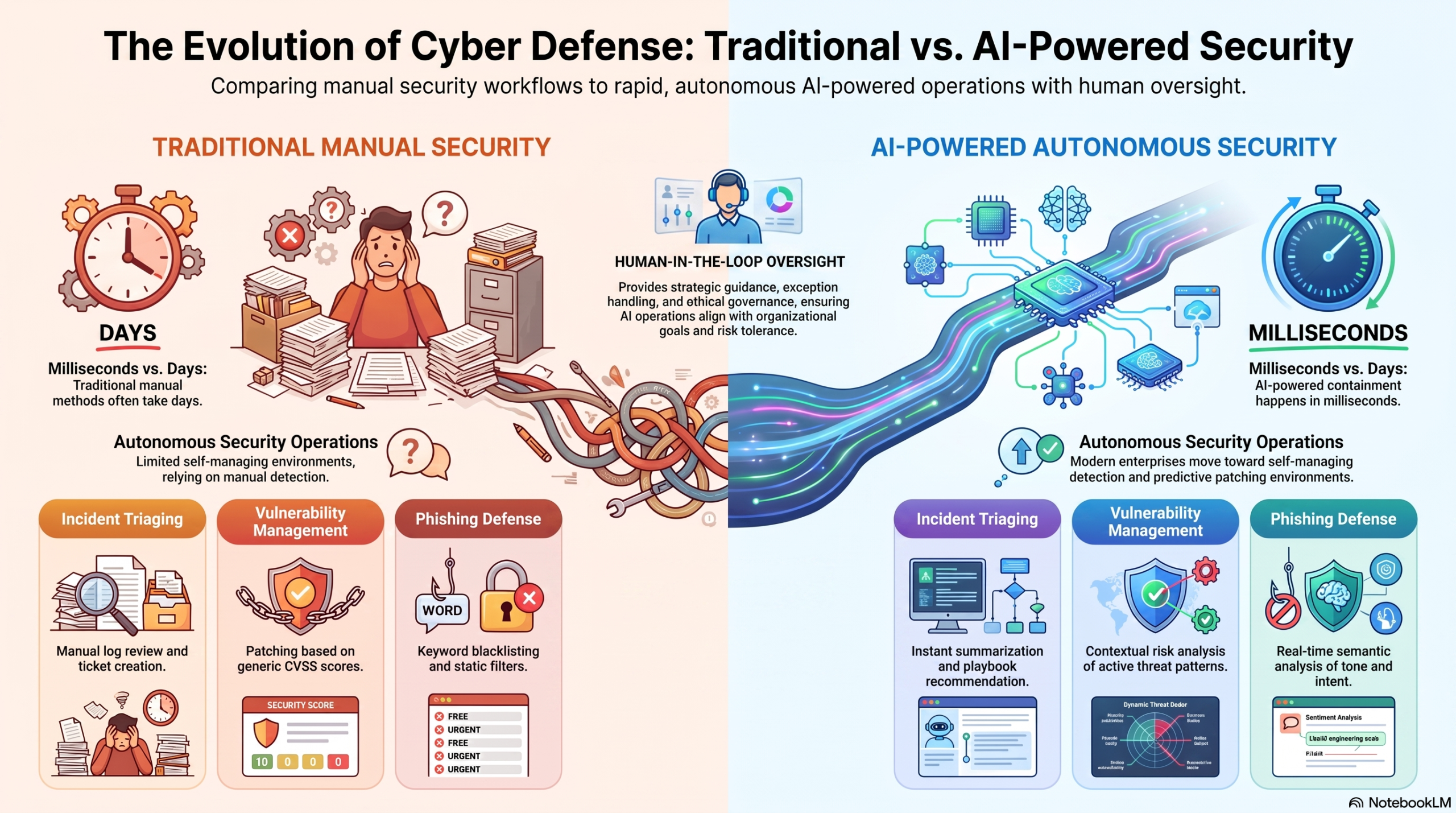
Incident response: AI summarizes alerts, assigns severity levels, and recommends response actions within seconds.
Vulnerability management: AI prioritizes patches based on active threats instead of relying only on standard severity scores.
Phishing protection: AI analyzes writing style, context, and intent to identify sophisticated phishing emails that traditional filters may overlook.
The Growing Risk of AI-Powered Cyberattacks
The same technology that strengthens cybersecurity also benefits attackers.
Cybercriminals now use generative AI to create convincing phishing campaigns. They can analyze public information and produce highly personalized messages in minutes.
AI also accelerates vulnerability discovery and exploit development. Automated systems can identify weaknesses and generate attack code much faster than manual methods.
Another emerging threat is prompt injection. Attackers hide malicious instructions inside documents or external data sources connected to AI systems, potentially exposing sensitive information.
Can AI Replace Human Security Analysts?
Generative AI improves speed and efficiency, but it cannot replace experienced security professionals.
Human analysts remain essential for incident attribution, strategic decisions, regulatory compliance, and executive communication.
Most organizations now adopt a human-in-the-loop approach that combines AI automation with expert oversight.
Risks Organizations Must Address
AI-powered cybersecurity introduces new operational challenges.
Poorly configured models may generate inaccurate conclusions. Sensitive data can leak if organizations use unsecured public AI services.
Attackers may also manipulate AI systems through data poisoning or prompt injection techniques. Strong governance and continuous monitoring remain critical.
The Future of AI in Cybersecurity
Generative AI has become a core component of modern cybersecurity strategies. Organizations that combine AI-driven detection with strong governance will respond faster and reduce operational risk.
Traditional signature-based tools still provide value, but they no longer offer sufficient protection on their own. Future cyber resilience will depend on intelligent automation, behavioral analytics, and skilled human oversight.