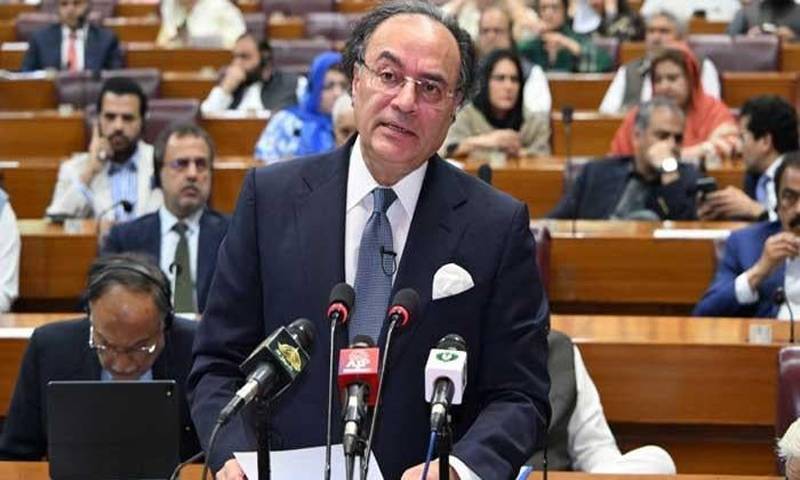
ISLAMABAD: Federal Finance Minister Muhammad Aurangzeb presented a federal budget exceeding Rs18 trillion in the National Assembly during the ongoing budget session.
Addressing the assembly, the finance minister thanked coalition partners and termed the presentation of the government’s third budget as an honor. He highlighted improvements in key economic indicators, stating that Pakistan’s economy has reached a size of $452 billion, while per capita income has increased from $1,751 to $1,901.
Aurangzeb noted that large-scale manufacturing grew by 6.1 percent and the services sector recorded a growth rate of 4.1 percent. He also stated that foreign exchange reserves have risen significantly, exceeding $17 billion, compared to $4 billion three years ago.
The minister said remittances are expected to surpass $41 billion by the end of the fiscal year, while the tax-to-GDP ratio has improved to 10.3 percent. He added that the fiscal deficit, which stood at 7.8 percent of GDP in June 2023, is projected to decline to around 4 percent by the end of the current fiscal year.
According to budget documents, total expenditures are estimated at Rs18.771 trillion, with Rs8.054 trillion allocated for debt servicing. Defence spending has been proposed at Rs3 trillion, while Rs1.071 trillion will be spent on civil government operations.
The Public Sector Development Programme (PSDP) has been allocated Rs1 trillion, and subsidies are estimated at Rs1.091 trillion. Pension expenditures are projected at Rs1.169 trillion, including Rs822 billion for military pensions and Rs272 billion for civil pensions.
The government has proposed a 7 percent increase in salaries and pensions for public sector employees, along with a 10 percent increase in the minimum monthly wage.
The Federal Board of Revenue (FBR) has been assigned a tax collection target of Rs15.264 trillion, while non-tax revenue is expected to reach Rs5.336 trillion.
The finance minister emphasized that strengthening national defence remains a top priority, with substantial allocations made to meet the country’s security needs.
Growth in OEMs and Assemblers
The finance minister noted that, as a result of government initiatives, the number of Original Equipment Manufacturers (OEMs) and assemblers in the country has increased to 118. These include manufacturers of tractors, motorcycles, passenger vehicles, and commercial vehicles.
Investment and Modern Technology in the Auto Industry
Aurangzeb said that substantial investment has been made in recent years in establishing new manufacturing plants and adopting modern technologies in the auto sector. This has increased competition within the industry and supported its modernization and development.
New Auto Policy Under Review
The finance minister stated that the government is working on a new auto sector policy to further promote the industry. According to him, the proposed policy is currently under review by a committee formed by the Prime Minister.
The final details of the policy will be presented to Parliament after approval by the Prime Minister and the federal cabinet. He expressed hope that the new policy will further promote local automobile manufacturing, attract investment, and encourage the use of advanced technologies.
Tax Incentives for Electric Vehicles
Muhammad Aurangzeb announced that the government has decided to continue the existing concessional tax regime for electric motorcycles, rickshaws, cars, and buses during the next fiscal year.
He said the government will continue encouraging electric vehicles as part of its efforts to promote environmentally friendly transportation, reduce the fuel import bill, and help control environmental pollution.
Proposal for 1% Sales Tax on Imported Electric Trucks
Aurangzeb revealed that the government is proposing a sales tax rate of only 1% on imported electric trucks. The objective is to encourage the adoption of electric technology in the commercial transport and freight sectors.
Luxury EVs May Be Excluded from Tax Benefits
The finance minister clarified that the government wants to ensure that very expensive and luxury electric vehicles do not benefit from these tax incentives.
He said the purpose of the policy is to support ordinary consumers and the local industry, rather than providing unnecessary incentives to high-end imported EV models.
Focus on Sustainable Growth
The finance minister concluded by stating that the government will continue taking measures to ensure the sustainable growth of the automobile sector, promote local manufacturing, and increase the use of environmentally friendly transportation across the country.