

Special Correspondent
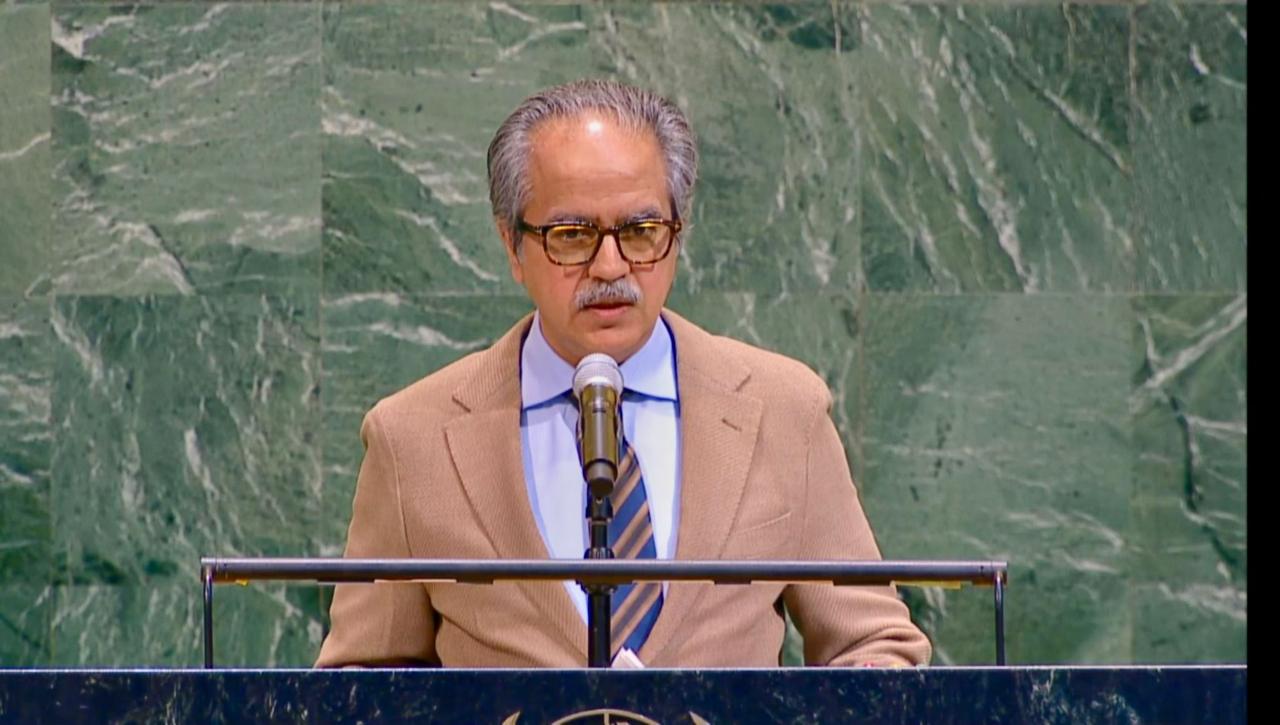
UNITED NATIONS: Ambassador Asim Iftikhar Ahmad, Permanent Representative of Pakistan to the United Nations has called on young leaders to play a central role in renewing multilateralism and advancing a world of peace, warning that global challenges cannot be addressed through division or power without restraint.
Delivering remarks at the opening ceremony of the conference “Future We Want: Global Initiative for Young Leaders”, held under the theme “Empowering Youth to Reinforce Multilateralism: Engaging Youth Leadership in Building a World of Peace,” convened by Italian Diplomatic Academy in collaboration with the Mission of Italy to the UN, Ambassador Asim said the international community faces a defining question: how to restore faith in cooperation, strengthen multilateralism, and build a world that is more peaceful, just and secure for present and future generations.
He said the world is living through a period of profound uncertainty, marked by persistent conflicts, strained trust among nations, entrenched inequality and fragile development gains. Too often, he said, dialogue is replaced by division, solidarity by indifference, and respect for law by the temptation of unchecked power.
Ambassador Asim stressed that multilateralism is not a matter of convenience but a necessity, because today’s interconnected challenges—such as conflict, climate change, pandemics and economic instability—require coordinated, inclusive and rules-based solutions. He said multilateral cooperation, anchored in shared responsibility and collective action, is essential to ensure responses are equitable and reflect the interests of all nations.
He reaffirmed Pakistan’s strong support for the United Nations and said that, despite imperfections, multilateralism remains the most legitimate framework for managing differences peacefully, advancing shared prosperity and upholding international law and the UN Charter.
He said that peace cannot rest on domination, development cannot be sustained through exclusion, and dignity and rights cannot be left to the whims of power.
The Pakistan Permanent Representative told participants that young people are already shaping the moral, social and political direction of the world. He said youth bring energy to institutions that often move too slowly, imagination where old assumptions have failed, and moral clarity at a time when cynicism is too often mistaken for wisdom.
He noted that Pakistan, with a large and vibrant youth population, sees young people as a source of creativity, resilience and hope, and fully supports their meaningful participation in strengthening multilateralism, building peaceful societies, advancing inclusive development and reinforcing international cooperation.
He also highlighted recent UN efforts to deepen youth engagement, including the establishment of the United Nations Youth Office and platforms such as the ECOSOC Youth Forum.
He said the Youth, Peace and Security agenda reflects the reality that young people are indispensable to preventing violence, promoting dialogue, rebuilding trust and sustaining peace. He also referenced the Pact for the Future and the Declaration on Future Generations, noting that decisions made today will shape the rights and opportunities of those who come after us.
Ambassador Asim outlined five ways young people can reinforce multilateralism: defending values that prioritize dialogue, empathy and coexistence; restoring trust in collective action by ensuring institutions remain connected to lived realities; advocating for peace rooted in justice and international law; advancing human-centered development focused on dignity and opportunity; and strengthening multilateralism so it becomes fairer, more representative and faithful to its founding ideals.
In conclusion, he said the future of multilateralism and the UN will depend on whether young people see it as a cause worth believing in and a platform worth shaping, and urged a renewed commitment to cooperation that advances peace and human dignity.
