Muhammad Saeed (Mulkhow)
The peaceful valley of Mulkhow in Upper Chitral has recently been shaken by a series of heartbreaking tragedies that have left families grieving and communities searching for answers.
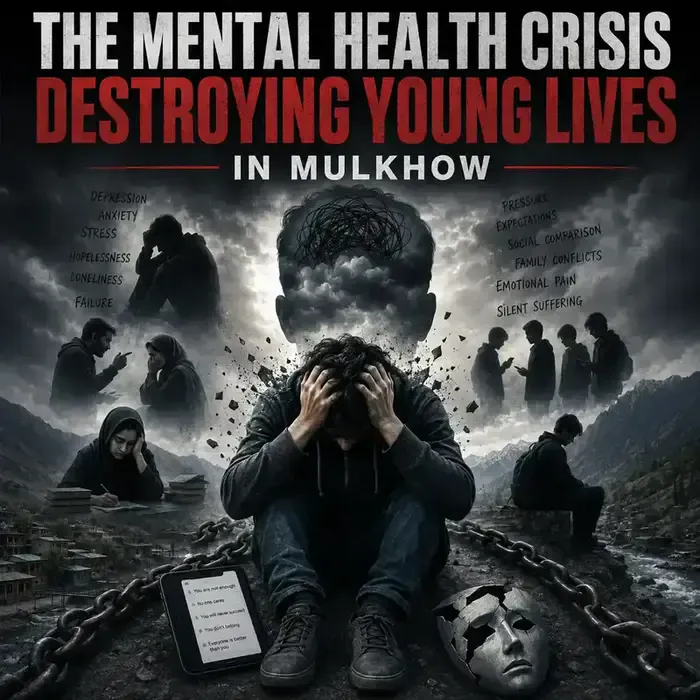
Within a short span of time, six individuals, including young people, mothers, and students, lost their lives after struggles linked to emotional distress, family conflicts, depression, social pressure, or mental health challenges. While each case had its own circumstances, together they reveal a deeply concerning pattern that cannot be ignored.
For many residents, these incidents have raised painful questions. How could so many lives be lost in a community known for its strong traditions, close-knit families, and social values? What pressures were these individuals carrying? And most importantly, what can be done to prevent such tragedies from occurring again?
The recent incidents have highlighted a reality that many communities are reluctant to discuss openly: mental health struggles exist even in places where people appear outwardly connected and supported. Depression, anxiety, emotional exhaustion, and feelings of hopelessness do not discriminate between urban and rural populations. They can affect students, professionals, parents, and young people alike.
Among the recent tragedies was a young hospital technician who reportedly struggled with depression for a prolonged period. Another incident involved a student whose hopes of pursuing higher education were reportedly affected by family disagreements regarding her future.
There were also cases involving family disputes, marital tensions, emotional distress, and overwhelming personal pressures. Most recently, a sixth tragedy involving a young woman has further deepened public concern and intensified discussions about mental health across the region.
Although the details of each case differ, they share a common theme: emotional suffering that may have remained largely unseen by those around them. Many individuals experiencing mental distress continue to perform their daily responsibilities while silently fighting battles that family members, friends, and neighbors may never fully recognize.
This reality points to one of the most serious challenges facing society today, the lack of open conversation about mental health. In many communities, emotional struggles are often dismissed as temporary sadness, weakness, or something that should simply be endured. As a result, people suffering from depression or severe anxiety frequently remain silent, fearing judgment or misunderstanding.
The situation is especially concerning young people. Today’s youth face increasing pressure related to education, employment, financial uncertainty, family expectations, and social comparison. Through social media, they are constantly exposed to images of success and achievement, often leading them to believe that everyone else is moving forward while they are falling behind. Such comparisons can deepen feelings of inadequacy and hopelessness, particularly among those already facing personal challenges.
Family dynamics also play a significant role. While parents naturally want the best for their children, communication gaps can sometimes create emotional distance. Young people need guidance, but they also need to feel heard.
When aspirations, fears, or concerns are repeatedly overlooked, emotional frustration may accumulate over time. Likewise, conflicts between spouses, parents and children, or other family members can become far more damaging when anger replaces dialogue and understanding.