
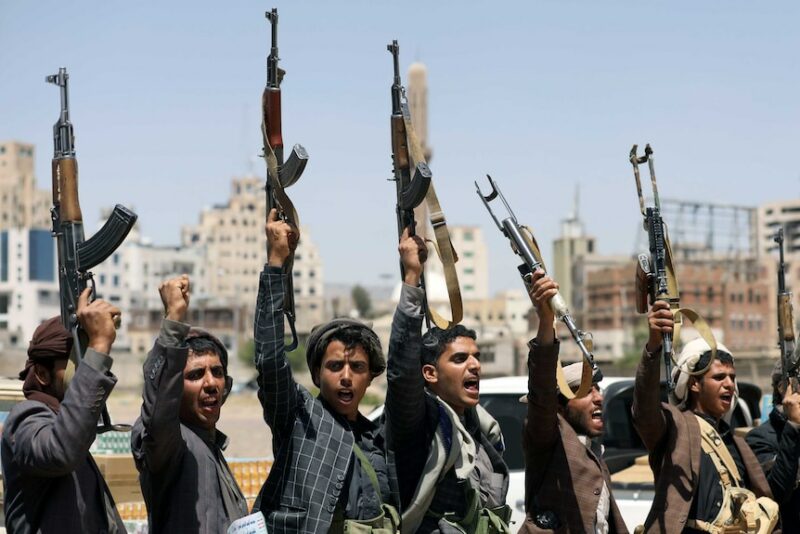
DUBAI: Yemen’s Iran-aligned Houthis said on Monday they would impose a naval blockade on Saudi Arabia, opening a potential new front against the United States in its war with Iran and raising the threat to global energy supplies and trade beyond the Gulf.
The escalation comes after one of the deadliest periods in the war for U.S. troops. The Pentagon on Monday identified two U.S. soldiers who were killed when Iran attacked an American base in Jordan on Friday, while they also said they had found unidentified remains that could be those of a third soldier reported as missing in action.
Separately, a fourth service member was killed in northern Iraq during the “controlled detonation of unexploded ordnance from a downed Iranian one-way attack drone.”
After the Houthis announced their blockade, the Saudi-led coalition in Yemen said in a statement that it would respond to them with force, and also that it began implementing protection measures for its ships moving through the Bab el-Mandeb Strait, a key export route for Saudi oil after the effective closure of the Strait of Hormuz.
The Houthis made their announcement despite signs that Tehran and Washington want to resume diplomacy to halt a worsening cycle of attacks that has all but wrecked a fragile interim agreement signed last month.
Iran’s Foreign Ministry said mediators had presented “proposals” to Tehran, signalling that diplomatic contacts remain active, but gave no details.
Oil prices rose briefly after the Houthi statement but later fell back as traders held out hope of a diplomatic breakthrough. The insurance cost of shipping goods through the Red Sea rose on the increased risks for merchant shipping.
Iran had been pressing the Houthis to close the Bab el-Mandeb gateway to the Red Sea if the U.S. continued to attack Iranian power infrastructure.
A full closure of the strait would reduce global oil supply by 7% as it would leave most of Saudi oil exports unable to leave the region. The disruption would add to the huge cut to oil flows from the war in the Gulf, which has already reduced shipments by 10% of global supply.–Reuters