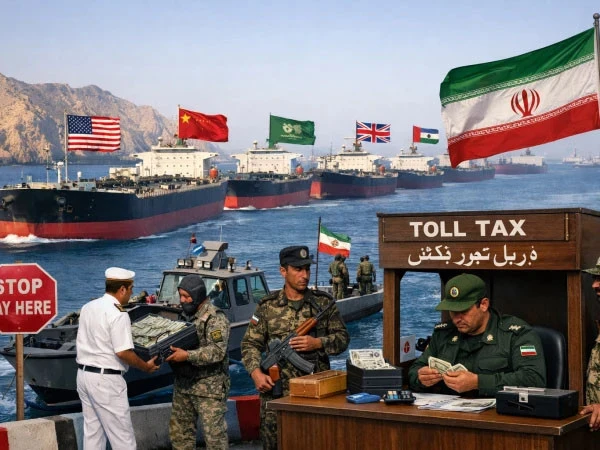
TEHRAN: Iran has reportedly imposed a toll tax on oil tankers passing through the strategically vital Strait of Hormuz, charging approximately $1 per barrel, according to international media reports.
The reports indicate that the Islamic Revolutionary Guard Corps (IRGC) is collecting up to $2 million per large tanker, based on an estimated capacity of around 2 million barrels.
The toll fee is said to vary depending on the vessel’s country of origin, cargo, and diplomatic relations with Iran. In a shift from traditional financial systems, Iran is reportedly accepting payments in alternative currencies, including the Chinese yuan and cryptocurrencies such as Bitcoin and stablecoins like USDT.
Analysts suggest that this payment mechanism is aimed at bypassing US sanctions and reducing reliance on the US dollar in global trade.
Access through the Strait remains restricted, with priority reportedly given to vessels from countries such as China, India, and certain Gulf states. Ships linked to the United States and Western allies are required to obtain prior approval from Iranian authorities, including submitting detailed information about ownership, cargo, crew, and tracking data.
Following clearance, vessels are assigned specific routes—often close to Iranian territorial waters—and are escorted by IRGC patrol boats to ensure safe passage.
Some unverified reports claim that certain companies have altered vessel registrations to secure access, though independent confirmation is lacking.
This system reportedly emerged after heightened tensions in late February 2026, when military escalation led to a near shutdown of the waterway, causing a 97% drop in tanker traffic. The Strait of Hormuz typically handles about 20% of the world’s oil and gas supply.
If fully implemented, the toll system could potentially generate annual revenues of $70–80 billion for Iran, according to estimates.