Muhammad Irshad
LAHORE: A two-day national consultation in Lahore has called for long-overdue reforms to Pakistan’s Christian family laws, urging the federal government to immediately approve draft legislation pending since 2017.
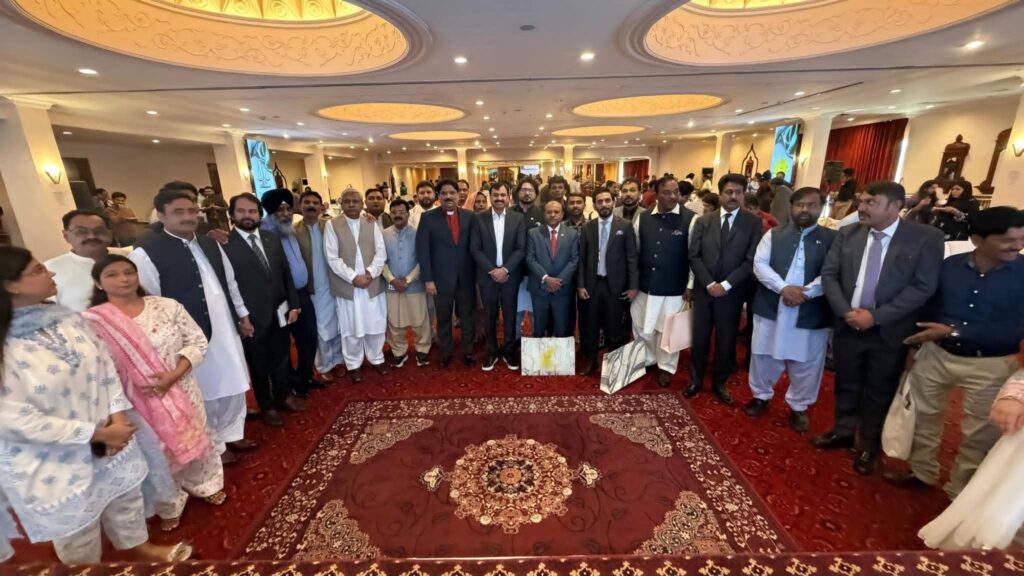
The consultation was organised by a coalition of seven human rights and development organisations in collaboration with the National Commission on the Status of Women and minority rights activists. More than 180 delegates, including parliamentarians, legal experts, academics, theologians and religious leaders, attended the event.
Participants deliberated on proposed amendments to the Christian Marriage Act of 1872 and the Christian Divorce Act of 1869, stressing the need to ensure legal equality and protection for Pakistan’s Christian community.
The coalition organising the consultation included the National Lobbying Delegation, Society for Human Equality and Empowerment, Bytes for All, Community World Service Asia, Peace and Development Foundation, District Development Association Tharparkar and Be the Change.
The opening session, moderated by Atif Jamil, focused on legal and social challenges confronting the Christian community and explored pathways for reform.
The Deputy Speaker of the Sindh Assembly questioned the prolonged delay in legislation, remarking that laws were being enacted for forests while reforms concerning human beings remained pending. He emphasised the need for collective efforts to bring about change.
Members of the Punjab Assembly highlighted the importance of the family institution, noting that marriage forms a new social unit and requires laws that correspond with present-day realities. A member of the Balochistan Assembly observed that every religion contains flexibility that can support progressive legislation.
The second session, moderated by Romana Bashir, examined theological perspectives and the role of Christian institutions in supporting reform. Religious scholars and bishops stressed that justice must evolve with changing social realities and that compassion and fairness should remain central to legal frameworks.
Lawmakers from Punjab, Sindh, Khyber Pakhtunkhwa and Balochistan, along with advisers on minority affairs, also participated in the consultation.
On the second day, discussions centred on the role of institutions, media, academia and civil society in promoting awareness and support for reforms to minority family laws. Participants noted that minority rights are frequently treated solely as religious matters, despite the urgent need for legal reform.
Noreen Nain Bano Lehri, Chairperson of the National Commission on the Status of Women, said legislation should be aligned with human rights principles and stressed the importance of collective efforts to promote tolerance and justice.
Shoaib Suddle said the issue extended beyond legal technicalities and was fundamentally linked to human rights and equal opportunities for minorities.
Farah Zia, Director of the Human Rights Commission of Pakistan, said minority communities lacked the same comprehensive legal protections available to the majority population and called for immediate legislation to address the disparity.
Maryam Ahsan said growing public awareness represented a positive development and noted that reducing unnecessary legal barriers could facilitate reforms.
In the concluding session, the Deputy Speaker of the Sindh Assembly pledged to support the passage of the proposed bill in the provincial assembly within the coming months, terming it a significant step toward safeguarding minority rights.
Participants agreed to pursue a joint strategy to build political consensus and ensure the proposed reforms to Christian family laws are enacted without further delay.