Special Correspondent
UNITED NATIONS: Pakistan has called for stronger protection of UN peacekeepers and realistic mandates matched with adequate resources, warning that peace operations are facing expanding responsibilities amid shrinking capacity, increasing risks to both mandate delivery and the safety and security of personnel.
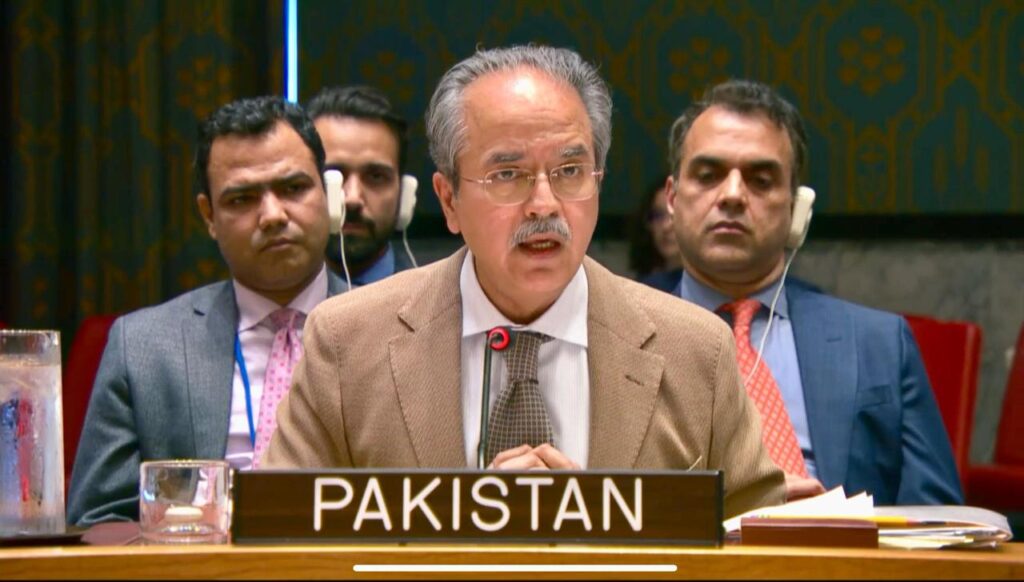
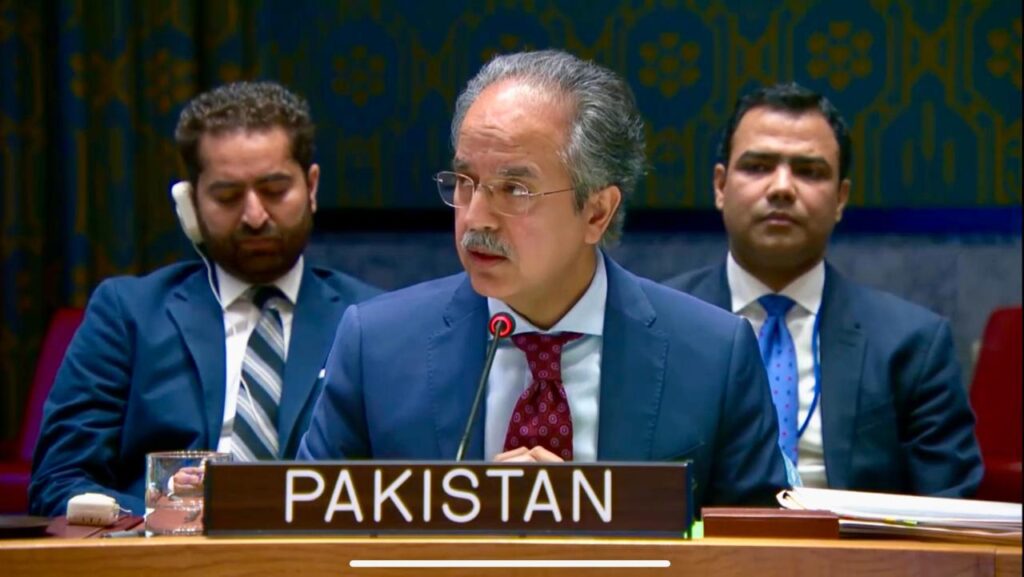
Speaking at the Security Council briefing on UN peace operations with reference to heads of military components, Ambassador Asim Iftikhar Ahmad, Permanent Representative of Pakistan to the United Nations, said that hearing directly from military leadership is vital because the military component remains the backbone of UN peacekeeping.
He cautioned that peacekeepers are operating in increasingly complex environments, including emerging threats such as drones and other asymmetric tactics.
Ambassador Asim highlighted that Pakistan’s long-standing contribution to UN peacekeeping, noting that Pakistan is among the largest and longest-serving troop contributors for over six decades. He said more than 250,000 Pakistani peacekeepers have served in 48 missions worldwide.
Recalling Pakistan’s sacrifices for maintenance of international peace, he mentioned that Pakistan has lost 182 personnel under the UN flag and therefore attaches the highest importance to the safety and security of peacekeepers.
He said that recent attacks against peacekeepers, including those targeting Indonesian peacekeepers in UNIFIL and Bangladeshi peacekeepers in Kadugli in UNISFA, reflect a deeply troubling trend. Such attacks, he said, are unacceptable and must not go unanswered.
He stressed that accountability for crimes against peacekeepers is essential for justice and deterrence, and that ending impunity is critical to preserving the credibility and effectiveness of UN peacekeeping and of the Security Council. He paid tribute to peacekeepers who have lost their lives in service of international peace and security.
Turning to UNISFA, Ambassador Asim noted that recent posture adjustments, including withdrawal from Joint Border Verification and Monitoring Mechanism team sites, demonstrate a more difficult operating environment and raise questions about sustaining monitoring, early warning and confidence-building along the Safe Demilitarized Border Zone with reduced physical presence.
He said stronger cooperation with Sudan and South Sudan, closer coordination with regional actors and appropriate use of technology can help preserve verification functions and situational awareness. However, he stressed that technology should complement—not replace—the stabilizing value of a credible presence on the ground, particularly for community engagement, transhumance dialogue and trust-building.
On MINUSCA, he described the Mission as a successful example of multidimensional peacekeeping delivering stabilization when backed by adequate resources, political support and strong partnerships. He said MINUSCA has contributed to civilian protection, support for political processes, extension of State authority and disarmament and reintegration efforts, and noted its role in supporting elections in the Central African Republic.
He said persistent insecurity in the east and southeast underscores the need to maintain key operational capabilities, adding that any future transition of MINUSCA should be conditions-based and guided by realities on the ground.
Ambassador Asim said that the experiences of UNISFA and MINUSCA show both the continued need for peacekeeping and its effectiveness as a central instrument of the Council. He stressed that mandates must remain realistic, missions must be provided the resources and political backing necessary to succeed and peacekeepers must be protected.
He also highlighted Pakistan’s ongoing collaboration with Denmark as the “peacekeeping duo” to keep sustained Council attention on strengthening peacekeeping, and said UN peacekeeping remains cost effective compared to other arrangements.