Special Correspondent
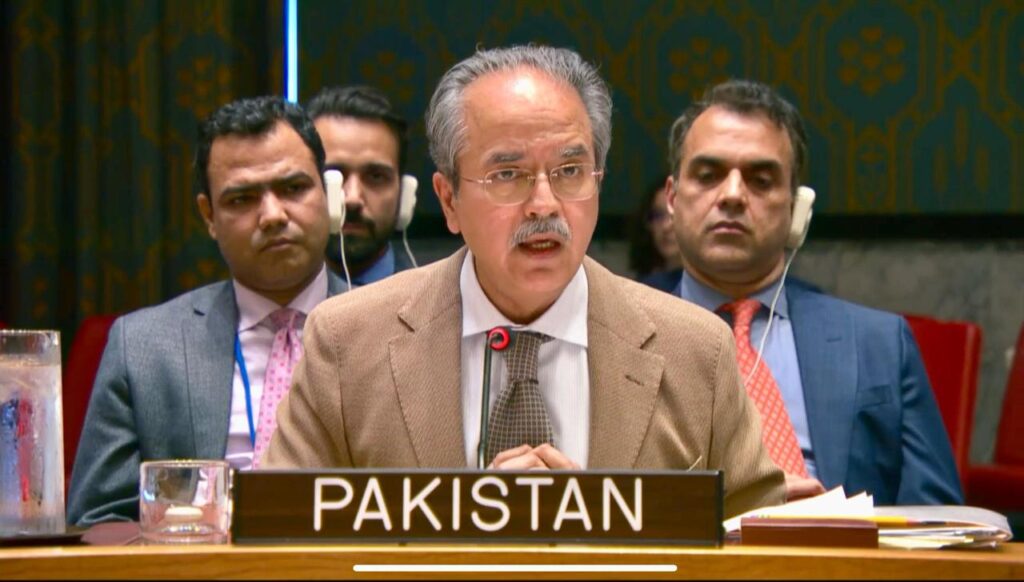
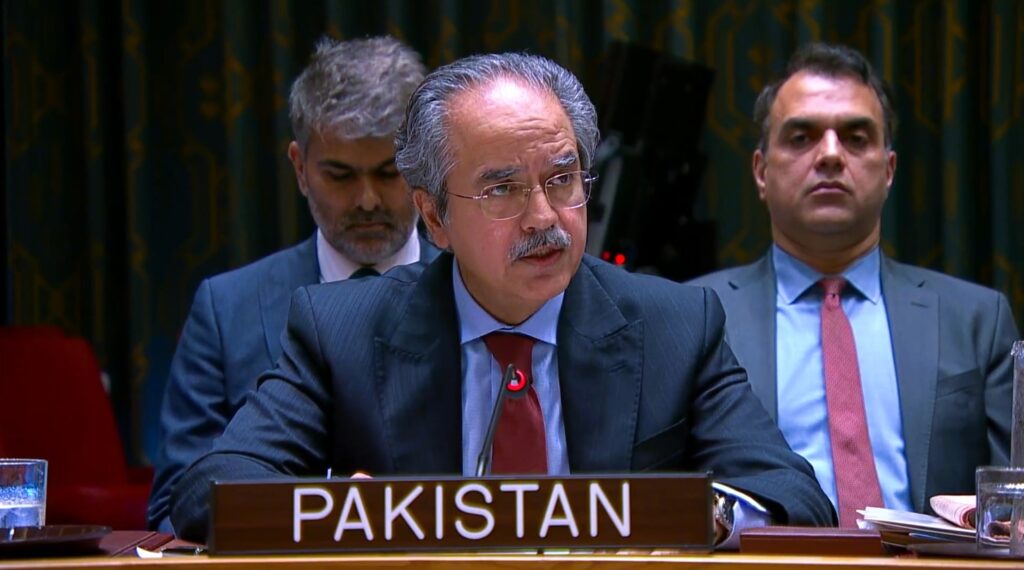
NEW YORK: At a high-level open debate of the United Nations Security Council on “The Safety and Protection of Waterways in the Maritime Domain” held on 27 April 2026, Pakistan emphasized the critical importance of safeguarding global maritime routes for international peace, security, and economic stability.
Delivering the statement, Asim Iftikhar Ahmad, Pakistan’s Permanent Representative to the United Nations, congratulated the Kingdom of Bahrain on its presidency of the Council and commended its initiative in convening the debate. He reaffirmed Pakistan’s solidarity with Gulf countries and support for their sovereignty and territorial integrity.
The ambassador highlighted remarks by António Guterres, appreciating his emphasis on international law, dialogue, and peaceful dispute resolution. He also acknowledged contributions from Arsenio Dominguez of the International Maritime Organization and maritime expert Nick Childs.
Pakistan underscored that global maritime spaces are central to trade, environmental stability, and resource management. The statement warned that disruptions to sea routes—particularly the closure of the Strait of Hormuz—could severely impact global trade, energy supplies, and food security, with developing countries facing the greatest consequences.
The envoy noted that prolonged disruptions could lead to rising inflation, economic instability, and balance-of-payment challenges worldwide. He stressed that such developments are testing the resilience of global governance systems and strategic stability.
As a littoral state in the Indian Ocean region, Pakistan expressed concern over maritime disruptions and their direct impact on its economy. The country reaffirmed its commitment to diplomacy, stating that it has been actively engaged—alongside partners including China, Saudi Arabia, Türkiye, and Egypt—in efforts to de-escalate tensions between the United States and Iran.
The statement broadened the scope of maritime security to include climate change, environmental protection, digital infrastructure security, and human rights at sea. Pakistan emphasized that these challenges require coordinated global action grounded in international law, particularly the United Nations Convention on the Law of the Sea.
Highlighting its contributions, Pakistan noted its leadership role in maritime security operations, including command of Combined Task Force 150 and previously Combined Task Force 151, as well as its own Regional Maritime Security Patrols.
The ambassador warned that the global rules-based order is under strain, with established norms increasingly being challenged. He cautioned that continued erosion of these frameworks could undermine international peace, security, and development.
Reaffirming Pakistan’s commitment to multilateralism and diplomacy, the statement concluded with a call for collective action to preserve global maritime security and uphold international law.