Mumtaz Hussain
UNITED NATIONS: Reaffirming its steadfast support for Libya’s sovereignty, independence, territorial integrity and national unity, Pakistan has called for renewed momentum on a Libyan-led and Libyan-owned political process as the only viable path to lasting peace and stability.
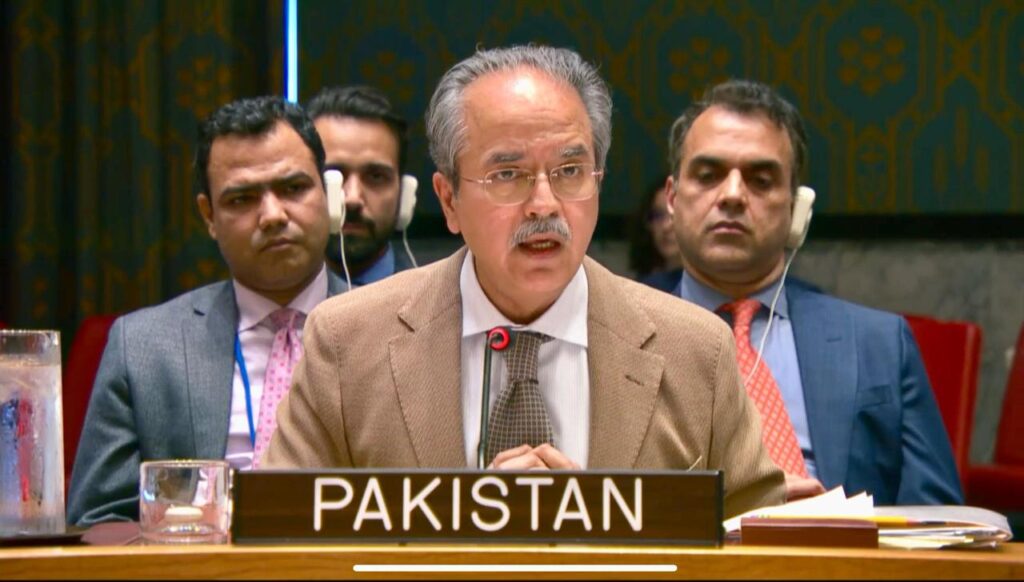
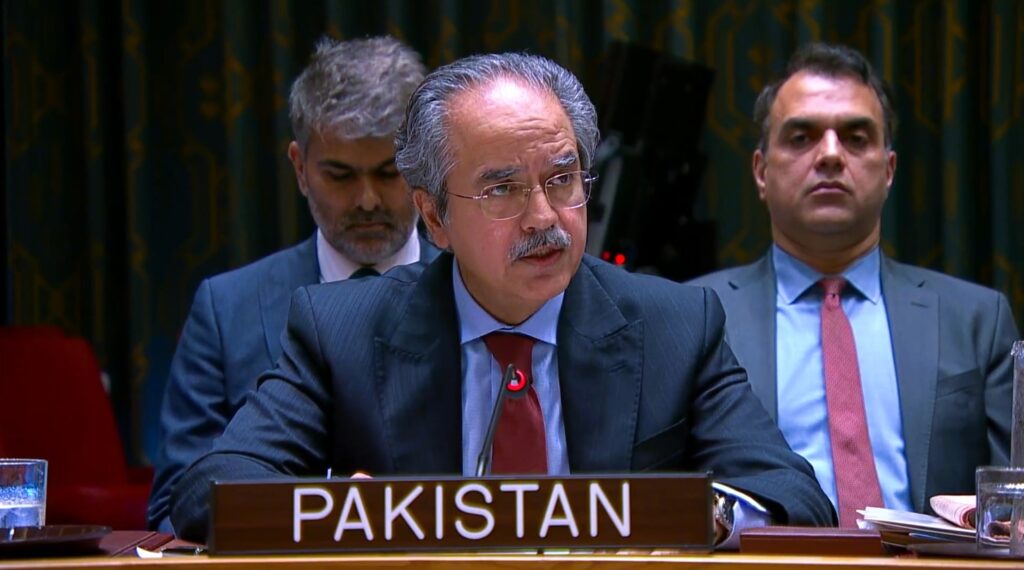
Speaking at the UN Security Council briefing on the UN Support Mission in Libya (UNSMIL), Ambassador Asim Iftikhar Ahmad, Permanent Representative of Pakistan to the United Nations, said Pakistan considers Libya a brotherly country and took note of the Secretary-General’s latest report highlighting both progress and continuing political, security and economic challenges.
Ambassador outlines five key points
First, he said that progress on the political track requires bridging differences on elections. He noted the continued lack of agreement between the House of Representatives and the High Council of State on key electoral issues, including reconstituting the High National Elections Commission and agreeing on the electoral framework. He expressed support for UNSMIL’s efforts, including its structured dialogue and two-step approach, to help narrow gaps and advance the political process.
Second, on the security track, he welcomed the restoration of relative calm in and around Tripoli and urged continued engagement among all Libyan stakeholders, with UNSMIL support, to fully implement agreed security arrangements and advance security sector reform. He also welcomed ongoing efforts by parties from the East and West to unify Libya’s military and security institutions.
Third, on the judicial track, Ambassador Asim noted continued engagement by Libyan legal institutions and supported the work of the UNSMIL-backed mediation committee of judicial and legal experts. He said these efforts reflect a shared commitment to preserving judicial unity, strengthening constitutional oversight and upholding the rule of law.
Fourth, he stressed that the economic track remains central to sustainable peace. He welcomed a milestone agreement by Libyan leadership on a unified spending framework, expressing hope it will contribute meaningfully to long-term economic stability.
Fifth, Ambassador Asim underscored that UN sanctions measures—particularly the asset freeze—are not punitive, but are intended to safeguard Libya’s resources for the benefit of its people.
He welcomed provisions in Security Council resolution 2819 (2026) aimed at improving management, transparency and preservation of frozen assets, including cooperation with the Libyan Investment Authority. He also expressed hope for timely adoption of an Implementation Assistance Notice by the 1970 Sanctions Committee.
In conclusion, Ambassador Asim said that Pakistan will continue working with Security Council members and international partners to support a stable, secure and united Libya, and to advance a Libyan-led pathway toward lasting peace, stability and prosperity.