BEIJING: In an unusual diplomatic workaround, China reportedly sidestepped its own travel restrictions on U.S. Secretary of State Marco Rubio by subtly altering the Chinese rendering of his name, allowing him to visit Beijing alongside Donald Trump.
According to media reports, Rubio—who has long been critical of China, particularly over its treatment of Uyghur Muslims—had previously been subject to Chinese sanctions, including travel restrictions. His inclusion in the high-level U.S. delegation posed a diplomatic challenge for Beijing.
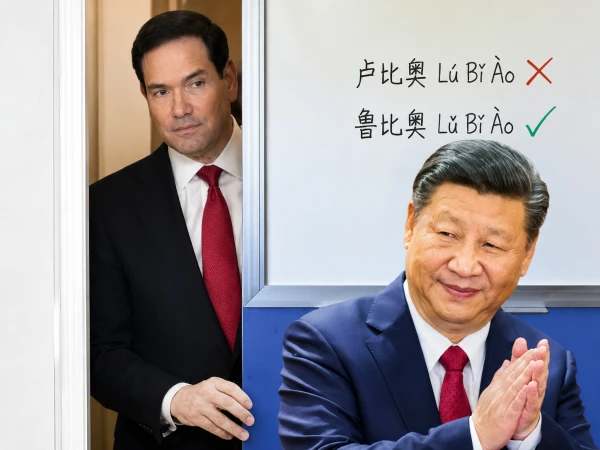
Instead of formally lifting the ban, Chinese authorities reportedly adopted a linguistic workaround by changing the Chinese characters used to represent Rubio’s name.
Since the original version of his name was listed under sanctions, the revised spelling effectively allowed him to enter the country without technically violating the restrictions.
Sources indicated that Rubio traveled under a modified name pronunciation, sometimes referred to as “Marco Luo,” enabling his participation in official engagements while keeping the sanctions framework intact.
Diplomatic insiders described the move as a creative solution, preserving both protocol and political positioning. Chinese officials later clarified that the sanctions were tied to Rubio’s previous actions as a U.S. senator, not his current role as Secretary of State.
The case highlights how linguistic flexibility in Chinese naming conventions can occasionally provide room for diplomatic maneuvering without formal policy reversals.