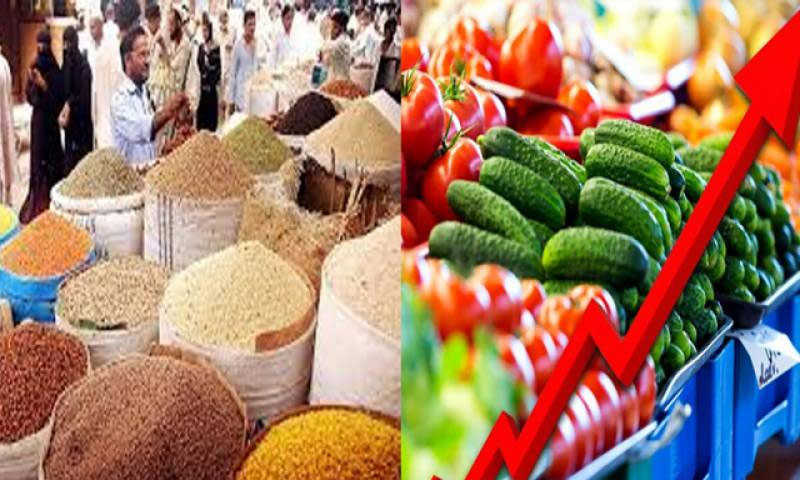
ISLAMABAD: Pakistan has witnessed a sharp rise in short-term inflation, with the Sensitive Price Index (SPI) recording a year-on-year increase of 14.52% for the week ending May 14, according to official data.
The surge in prices has placed significant strain on household budgets, with many citizens expressing concern over the government’s ability to control the situation.
Data released by the Pakistan Bureau of Statistics showed that on a week-on-week basis, SPI increased by 0.47%, indicating persistent inflationary pressure despite tight monetary policies and a slowing economy.
Fuel prices were among the biggest contributors to inflation, with petrol rising by 64.23% and diesel by 61.61% on an annual basis. Prices of essential commodities also surged, including flour (57.56%), electricity for low-end consumers (52.58%), LPG (48.34%), onions (50.06%), and tomatoes (40.66%).
Economists attribute the rise in inflation to global factors, including tensions involving the United States, Iran, and Israel, which have pushed up oil prices and transportation costs, impacting food and supply chains in Pakistan.
Dr Jazib Mumtaz, an economist affiliated with the Institute of Business Administration, said inflation has been driven largely by supply constraints and rising transport costs. He added that higher fuel prices have increased freight charges, leading to higher prices for imported goods.
He also pointed out that uncertainty in the region has fueled panic buying and hoarding, further driving up prices. He urged the government to provide relief by reducing the petroleum development levy.
On a weekly basis, tomato prices saw the highest increase at 22.13%, followed by flour (4.94%), diesel (3.76%), and petrol (3.73%). Although prices of chicken, eggs, and pulses showed some decline, the reduction was insufficient to offset overall inflation.
Meanwhile, brokerage firm Topline Securities has warned that Pakistan’s Consumer Price Index (CPI) could reach between 11% and 11.5% in May 2026, marking the highest level in the past 23 months.
Experts caution that if the current trend in fuel, electricity, and import prices continues, living conditions for middle- and low-income groups may become even more challenging in the coming months.