Muhammad Irshad
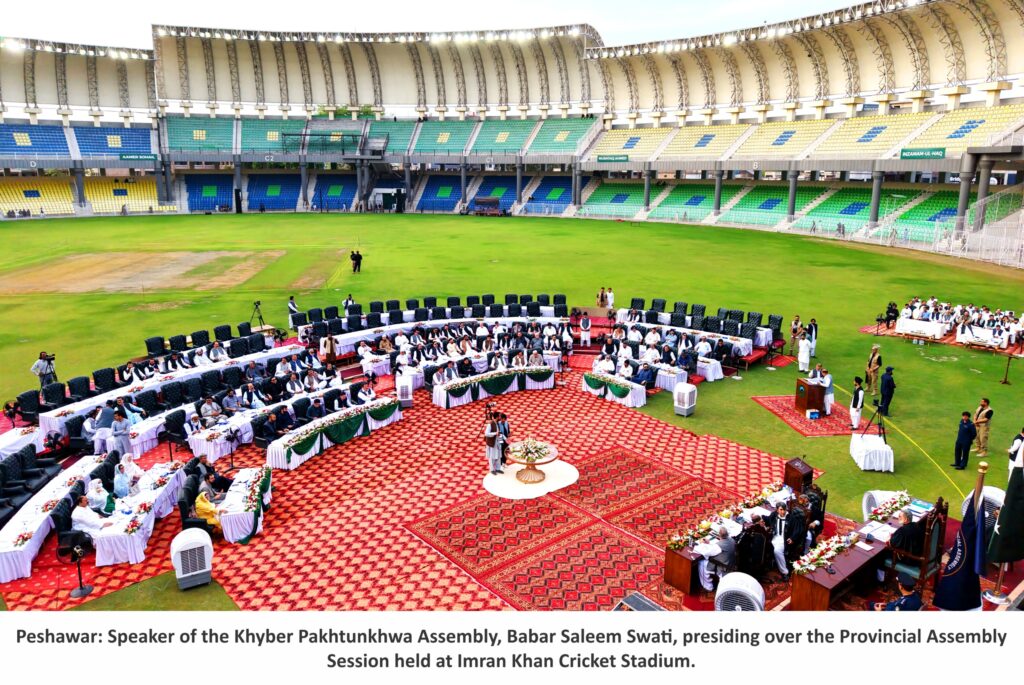
PESHAWAR: An unusual session of the Khyber Pakhtunkhwa Assembly held at the Imran Khan Cricket Stadium exposed sharp political divisions, as most opposition parties boycotted proceedings while members of the Pakistan Peoples Party attended and actively participated.
The boycott decision was taken during a joint meeting of opposition parties led by Opposition Leader Dr Ibadullah, who termed the move an unnecessary expense and a “political show.” He questioned why the session was held outside the assembly building and criticised the heavy security arrangements, which disrupted routine life and commercial activity.
The session, chaired by Speaker Babar Saleem Swati, began nearly two hours late. In his remarks, the speaker described the event as a “historic moment,” aimed at enhancing transparency and bringing parliamentary proceedings closer to the public.
Adviser for Sports and Culture Taj Muhammad Tarand defended the decision, saying the speaker has the constitutional authority to select the venue. He said the initiative would help citizens better understand legislative processes and promote public engagement.
However, traders in areas surrounding the stadium criticised the closure of markets due to security measures, reporting financial losses and terming the exercise unnecessary. Observers also pointed to administrative shortcomings, including sound system failures and difficulty in maintaining decorum due to the presence of party workers and supporters.
During the question hour, several queries related to fisheries, healthcare, hydropower and water supply schemes were referred to standing committees after incomplete responses from relevant departments.
The assembly passed six resolutions, including calls for a fair trial and improved medical facilities for Imran Khan and Bushra Bibi, as well as concerns over Pakistan-Afghanistan tensions, Middle East developments, rising fuel prices and judicial transfers. PPP lawmakers opposed some of the resolutions, calling for broader applicability and improved drafting.
Additionally, the house condemned prolonged electricity and gas load-shedding, with members highlighting disparities in resource distribution despite the province’s contribution to energy production. A parliamentary committee was formed under the chief minister to address the issue.
Despite being termed a landmark initiative by the government, the session triggered debate over governance priorities, public inconvenience, and the effectiveness of holding legislative proceedings outside traditional venues, with analysts questioning whether such symbolic measures translate into tangible democratic gains.